



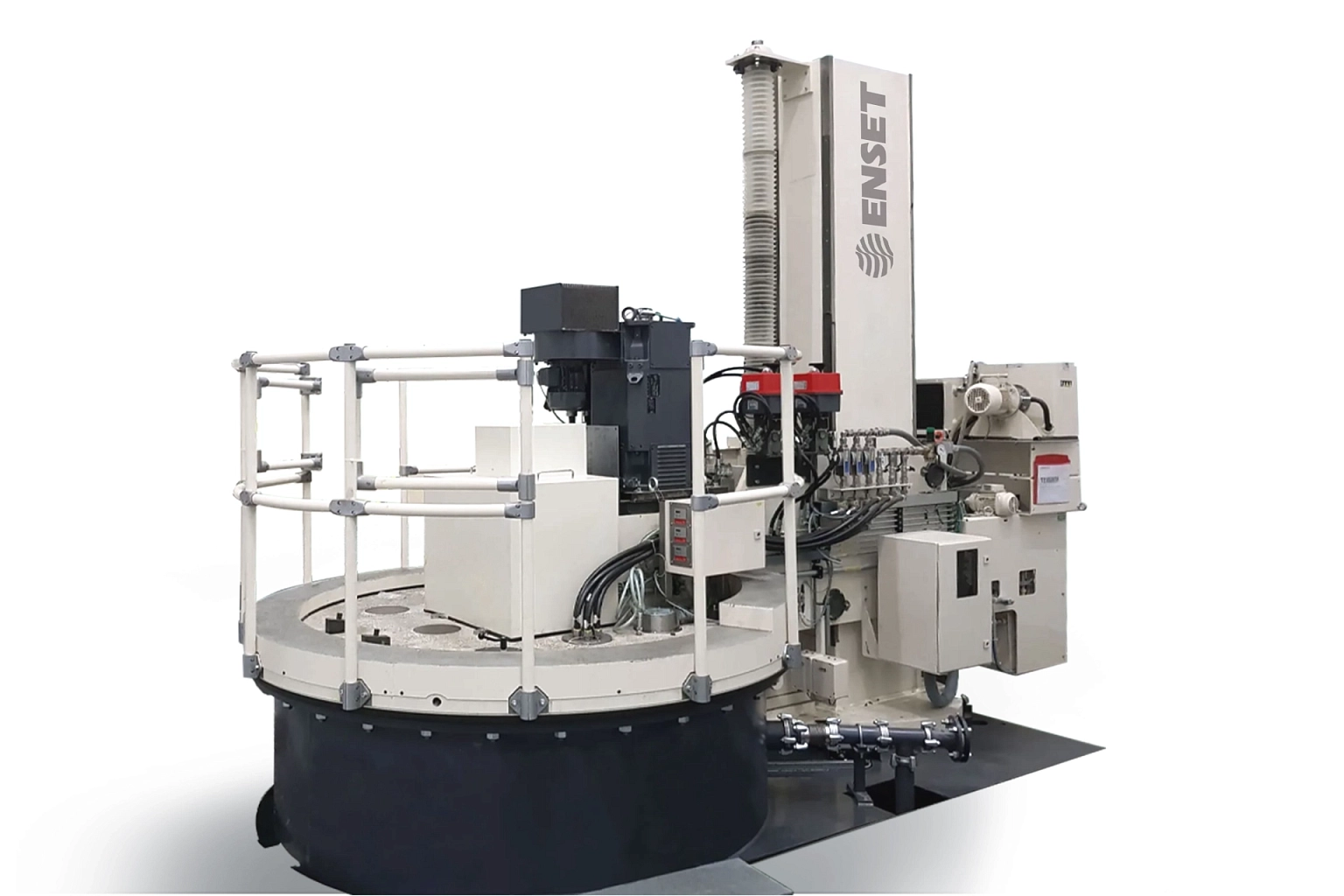
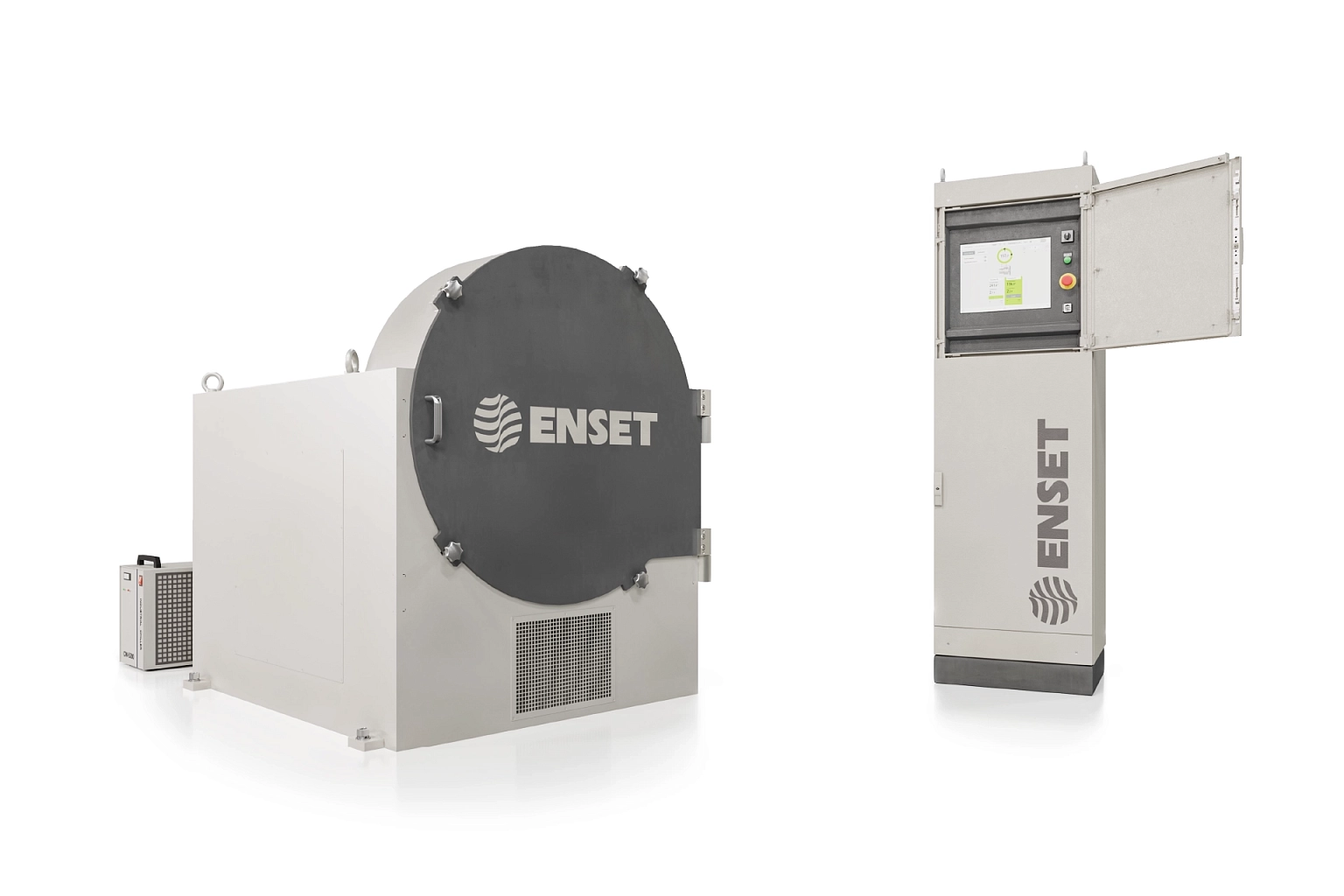
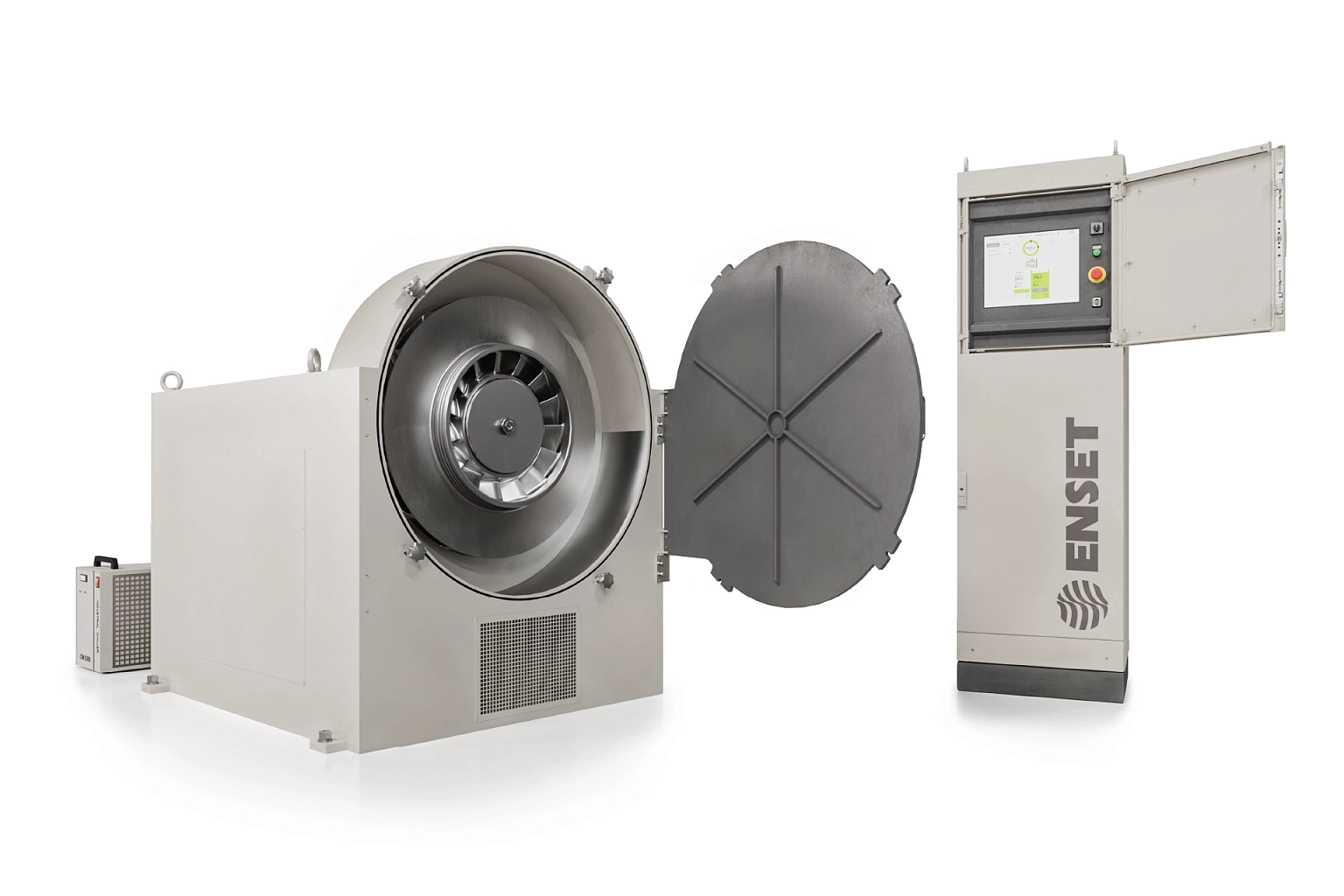
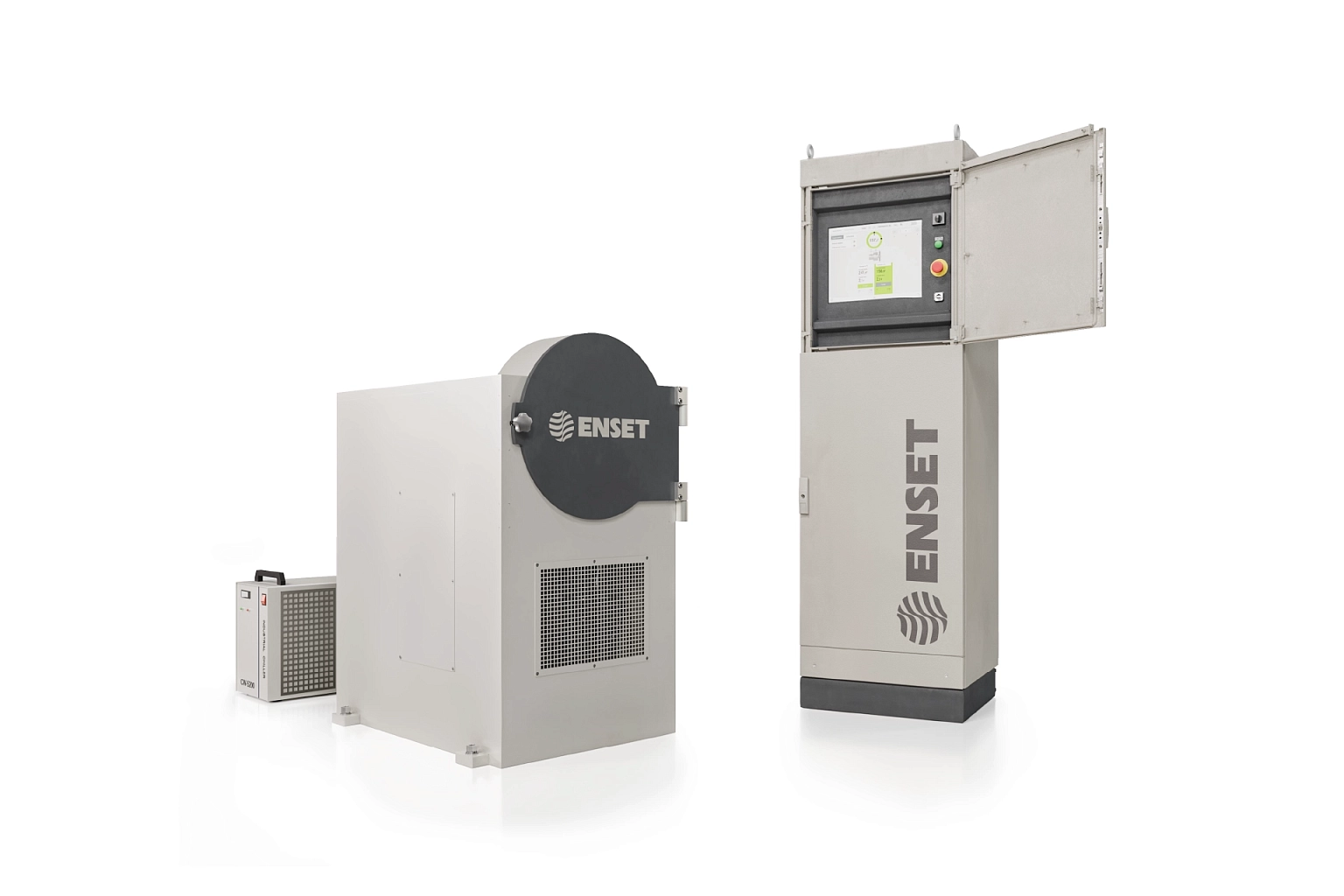
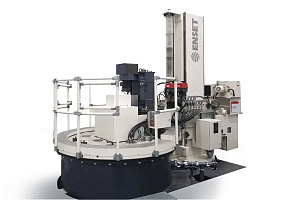
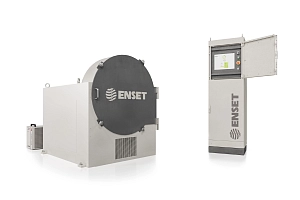
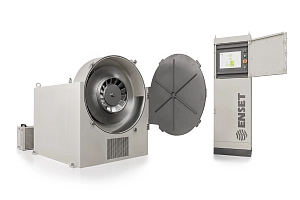
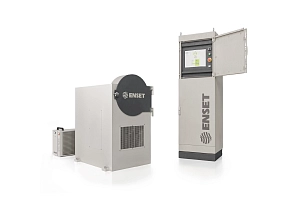
ENSET manufacturing expertise includes high-speed testing machines, along with spin test and balancing equipment. Such machines allow rotors to be tested across the full operating speed range before commissioning. During testing, rotors can be exposed to real-world operating conditions, including ultra-high speeds (up to 250,000 rpm), low and high temperatures, and low-cycle fatigue testing.
Spin testing machines are vital to modern industry, supporting a diverse range of sectors. They test critical components in both prototype and production phase under extreme loads, ensuring reliable performance.
⎯ Aviation sector: testing of aircraft and helicopter turbojet engine rotors, as well as high-speed electrical machine armature. Overspeed testing ensures that fan and turbine impellers can withstand centrifugal forces under any operating conditions, and that electric motors and generators perform reliably in flight.
⎯ Energy sector: power station steam and gas turbines operate continuously at high speeds and demand high reliability. Spin testing helps prevent accidents, ensuring a stable energy supply and long equipment service life.
⎯ Oil, gas, and chemicals sectors: compressors and pumps used in the extraction, transportation and processing of hydrocarbons, as well as in the production of industrial gases, are equipped with impellers that operate in extreme conditions. Acceleration bench testing verifies their readiness for durable and reliable operation.
⎯ Automotive sector: turbochargers, transmission components, and other rotating parts of modern vehicles undergo rigorous bench testing to ensure their reliability and efficiency.
⎯ Medical sector: centrifuges used in medical laboratories for separating blood and other biological materials also require reliable rotor operation and precise balancing, verified through bench testing.
⎯ Scientific research: in materials science and mechanical engineering, spin testing machines are used to study the behaviour of new materials and structures, paving the way for the creation of more advanced machines.
ENSET spin test and balancing machines can handle various critical tasks simultaneously.
● Verifying strength and reliability: rotors must be tested to ensure they do not burst under the centrifugal forces generated at operating speeds. This is especially vital for rotors operating at high speeds, where the slightest manufacturing or design error can have catastrophic consequences.
● Determining critical speeds: every rotor has its "critical speeds" — speeds at which resonant vibrations can cause disintegration. Overspeed bench testing identifies these speeds and ensures that the rotor operating rpm remains within a safe range.
● Balancing: rotation at high speeds leads to rotor deformation and causes unbalances. Even a minor unbalance can result in vibrations, noise, premature wear and even rotor burst. To minimise these outcomes, a spin test and balancing machine can balance the rotor at speeds close to operating conditions.
● Investigating dynamic behaviour: to optimise rotor design, engineers can study its behaviour at various speeds, temperatures and loads, gathering valuable data.
● Testing start-up and run-down sequences: rotors must safely pass through all acceleration and deceleration stages without failing due to excessive loads or low-cycle fatigue.
● Certification and quality control: for many types of rotors, spin testing is mandatory for compliance with safety and quality standards.
ENSET spin testing machines are highly complex, requiring deep expertise and experience to develop and manufacture. This equipment comprises several key components.
1. Drive system: the bench’s core component, used to spin the rotor. ENSET spin test and balancing machines use a powerful direct electrical synchronous drive capable of accelerating the bench spindle up to 250,000 rpm, without using multipliers or step-up gears. The drive is connected to the spindle via a magnetic coupling through the diaphragm of the vacuum chamber.
2. Vacuum chamber: to reach ultra-high speeds and minimise air resistance, the spindle and rotor are located inside a vacuum chamber. This significantly reduces energy consumption and prevents air friction from heating up the rotor. The bench also includes a highly efficient vacuum pump.
3. VIBROLAB-5 measuring and control system: an array of sensors monitoring key parameters, including the spindle rotational speed and vibration, the temperature of the bearings and their coolant, and the pressure in the vacuum chamber. All data is collected and analysed digitally, allowing engineers to monitor testing in real time. VIBROLAB-5 is listed in the State Register of Measuring Instruments with a verification interval of three years.
4. Reliable safety systems: tests are conducted at extreme speeds, so safety is a top priority. The vacuum chambers of ENSET test rigs are lined with robust protective layers in strict compliance with safety requirements, designed to contain rotor fragments in the event of burst during testing. Other safety features include emergency shutdown systems that trigger when vibrations exceed safety levels, the chamber loses pressure, or the spindle bearings overheats.
5. Options and accessories for comprehensive testing: if required for research purposes, benches can be fitted with rotor heating and cooling systems, a high frame-rate video camera for recording rotor deformation and burst, as well as a strain gauge telemetry system to detect stresses and deformations within the rotor body during testing.
ENSET spin test, balancing, and overspeed testing equipment is offered under the RAPID series with a 60-month warranty and unlimited technical support throughout its service life (under a service contract).
For further information, feel free to contact ENSET sales team by phone: +7 960 442-73-51